The Rissingtons
13 August 2012
|
Helen was at home for
the weekend as both her and Roger’s birthday fall in mid-August. On Friday we had visited |
||
|
|
The ◄ The plan is cruciform, as indicated in the
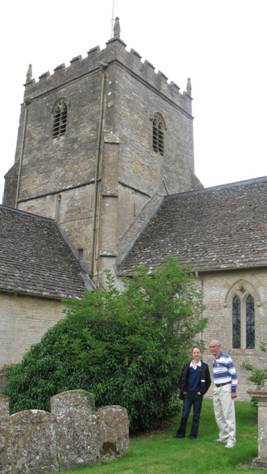
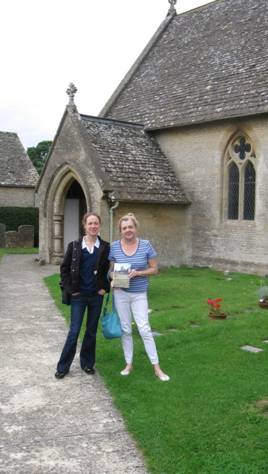
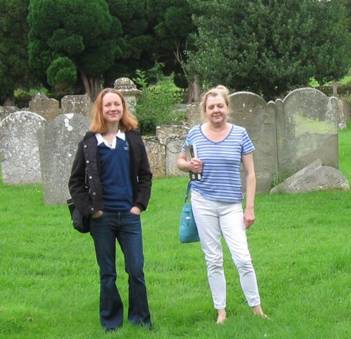
view of Helen and Roger in front of the tower Helen and Teresa en route to the south door ► |
|
|
|
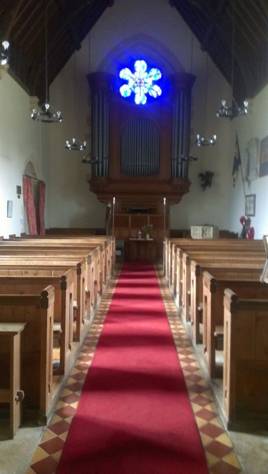
◄ A striking feature is the deep blue rose
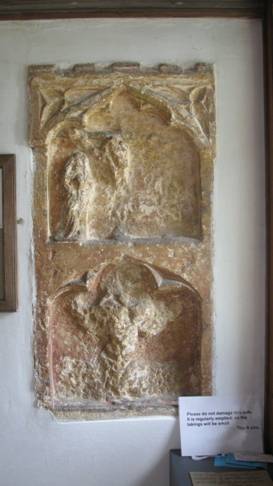
window in the west wall above the organ A 15th Century carved stone panel in the
porch ► |
|
|
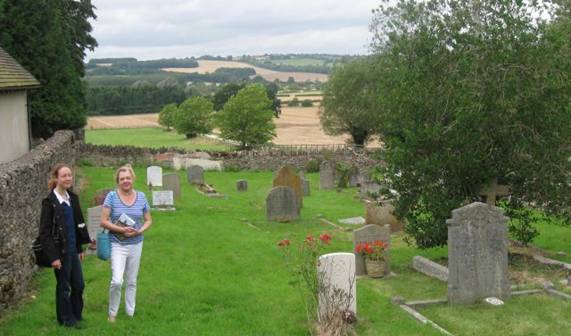
Helen and Teresa in the
old churchyard … |
… and in a newer addition
affording a splendid view over the valley |
|
|
We
had brought the satnav with us, and we needed it to guide us through narrow
and poorly signed country roads linking the villages. We passed through Little Rissington without
stopping – the church being some distance to walk from the road, and dull
externally and over-restored internally, according to David Verey (Cotswold Churches, Nonsuch 2007). |
||
|
|
Instead we went on to
Wyck Rissington, where we looked round the church of St Lawrence It was established in
Norman times, but the main surviving architectural features on the tower and
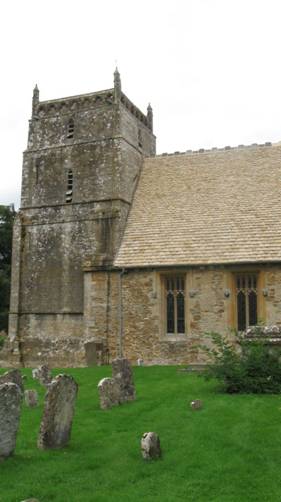
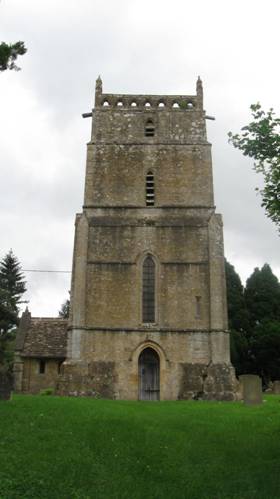
in the chancel are Early English. ◄ The church boasts a new roof completed in
2011 The rather squat tower ►
|
|
|
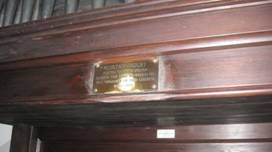
The organist at one time was Gustav Holst: a brass plate on the organ he played
commemorates this ► |
|
|
|
|
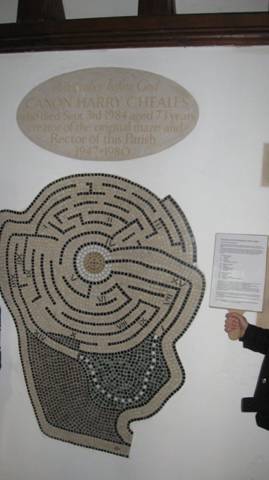
◄ A representation of a liturgical maze which
occupied the garden of the rectory until 1984. Helen’s hand holds the explanatory notes At different points in
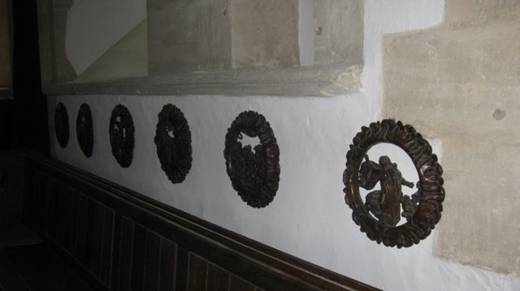
the maze, wooden carvings showed pilgrim stations – twelve of these now
decorate the walls of the chancel ▼
|
|